The UK's global reputation for delivering high-quality courses attracts large volumes of international applicants. Discover the facts and figures that make up its student population
The latest Higher Education Statistics Data: UK, 2016/17 from HESA provides a detailed breakdown of enrolment figures for domestic and international students.
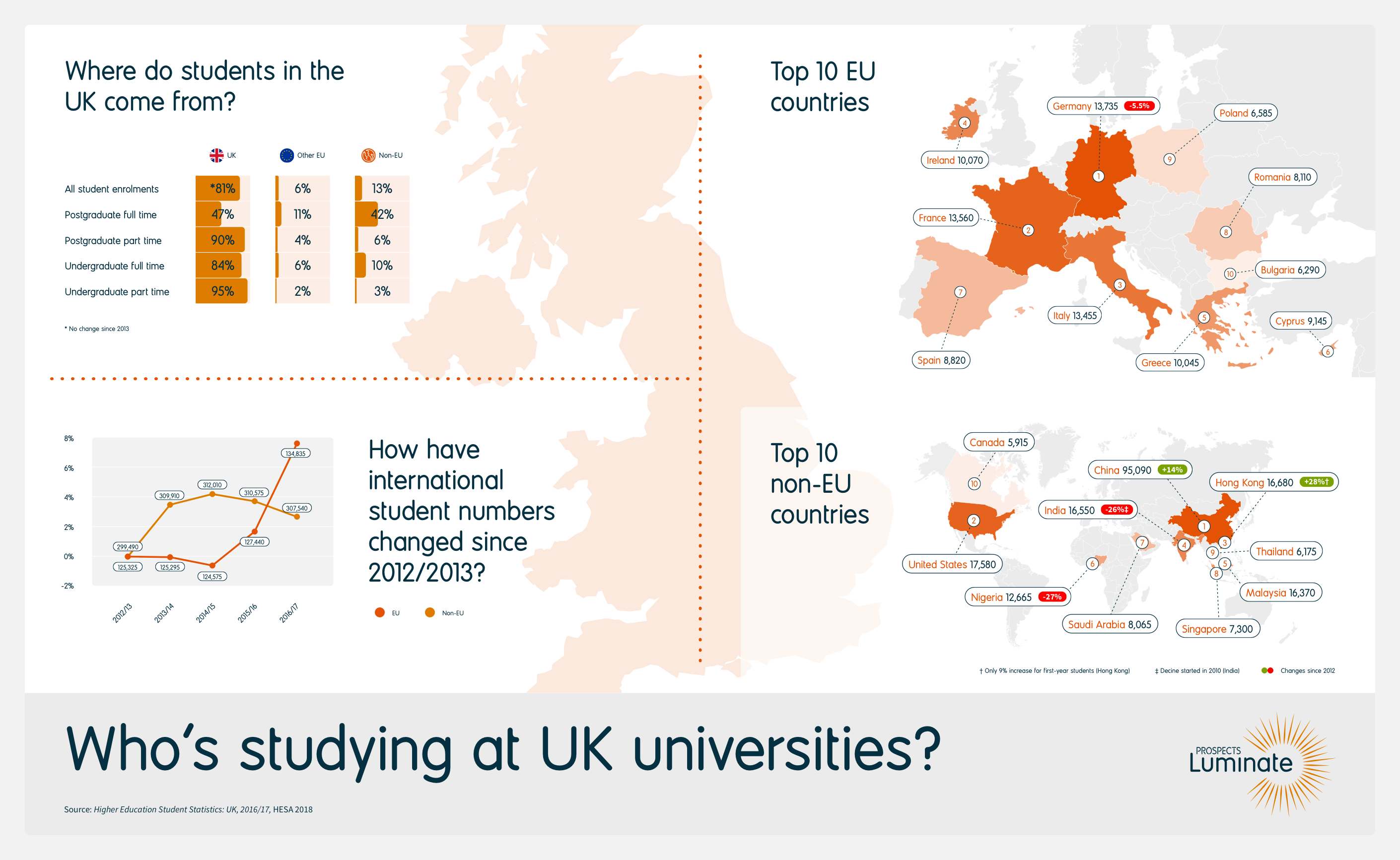
Where do students in the UK come from?
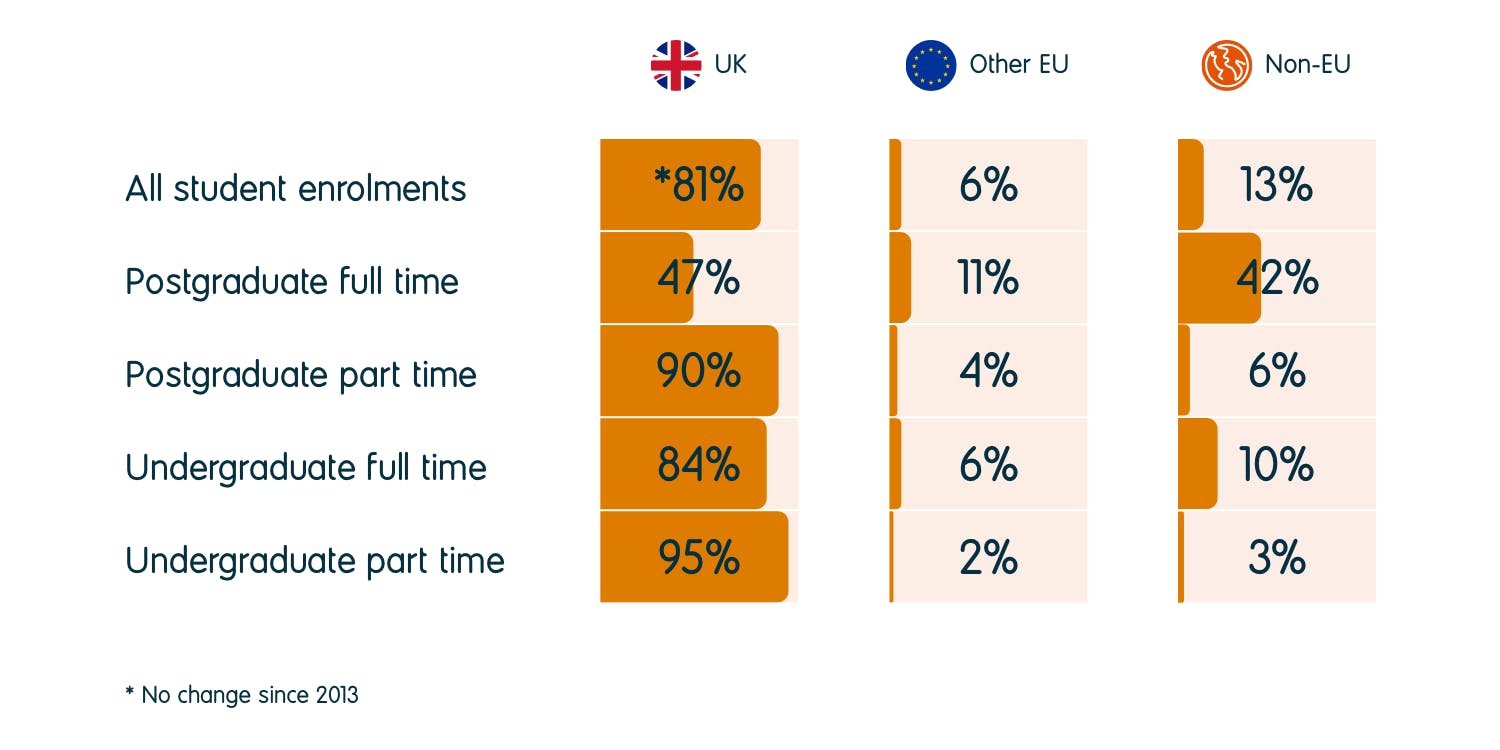
It is no surprise that the majority of students (81%) at UK higher education providers came from the UK in 2017, and this figure has remained unchanged since 2013. The level of study and whether a student studied full- or part-time appears to have an impact on the figures, with part-time undergraduate students studying in the UK most likely to be from the UK.
The most striking difference can be seen through a comparison of full-time and part-time postgraduates and their respective domiciles; 42% full-time postgraduates were originally domiciled in non-EU countries, whereas this figure is only 6% for part-time postgraduates. The majority of part-time postgraduates (90%) were from the UK. Postgraduate study is a crucial source of income for the UK HE system so overseas students are heavily courted.
Large numbers of international graduates can be found at the University College London, The University of Manchester, and The University of Edinburgh. These students often study business and administrative-related subjects (121,550 students), and the second most common degree studied was engineering and technology (96,640).1
How have international student numbers changed since 2012/13?
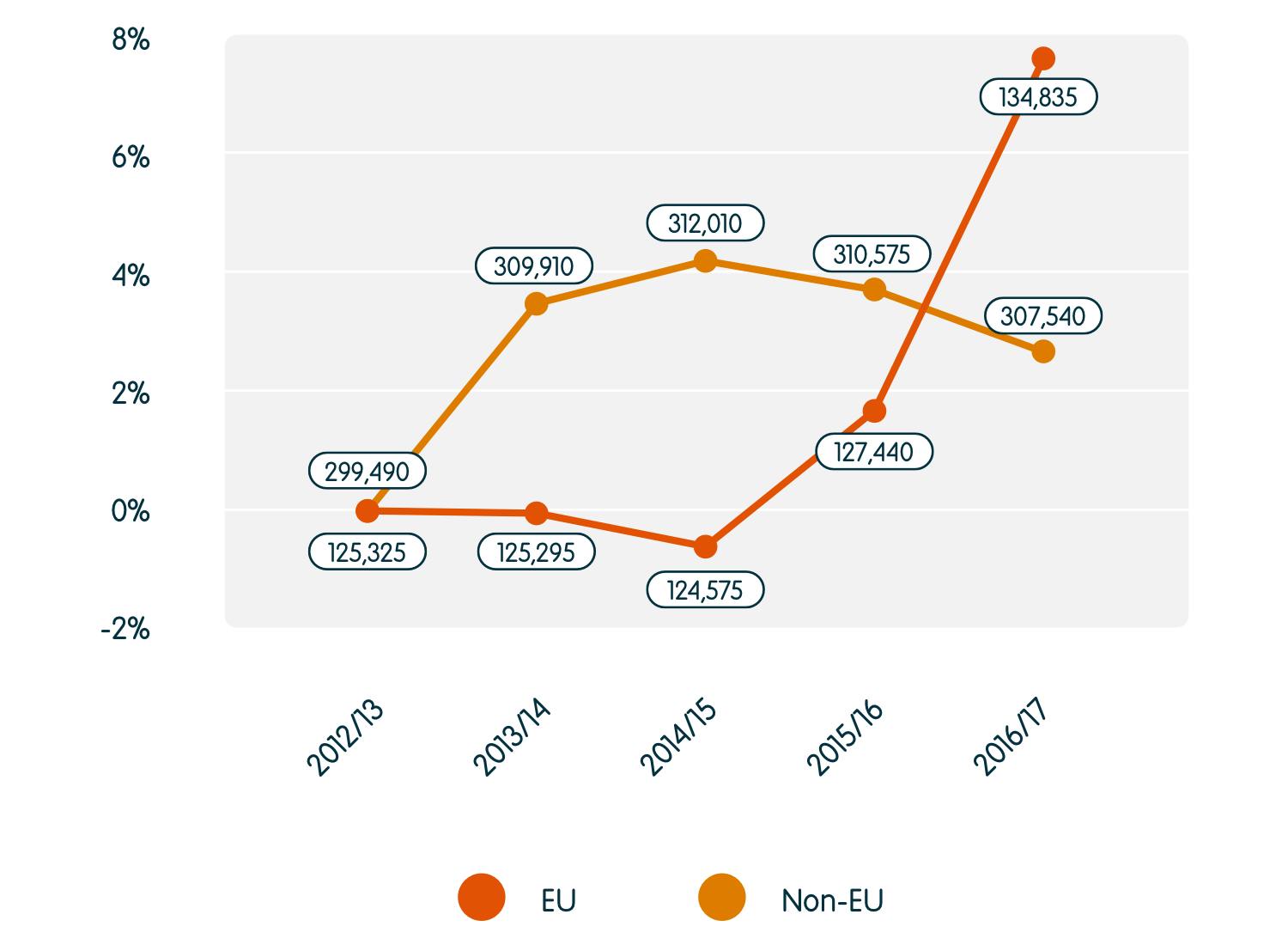
The number of non-EU students has steadily declined since 2014/15, but applications from EU students (excluding the UK) have continued to rise.
The increase in EU students could be a result of the UK Government's decision to lift the cap on overall HE student numbers in 2015. It remains to be seen whether the UK’s impending withdrawal from the EU has also had an impact.
A closer look at individual regions shows that Scotland experienced a growth in the number of non-EU enrolments (9%), and other EU admissions to providers in Northern Ireland declined by 22%.
Top 10 EU countries
In 2016/17, students from other EU countries were most likely to come from Germany, France or Italy. Although German students represent the greatest proportion of other EU students, the number of enrolments to UK HE providers declined by 5.5% between 2012/13 and 2016/17.
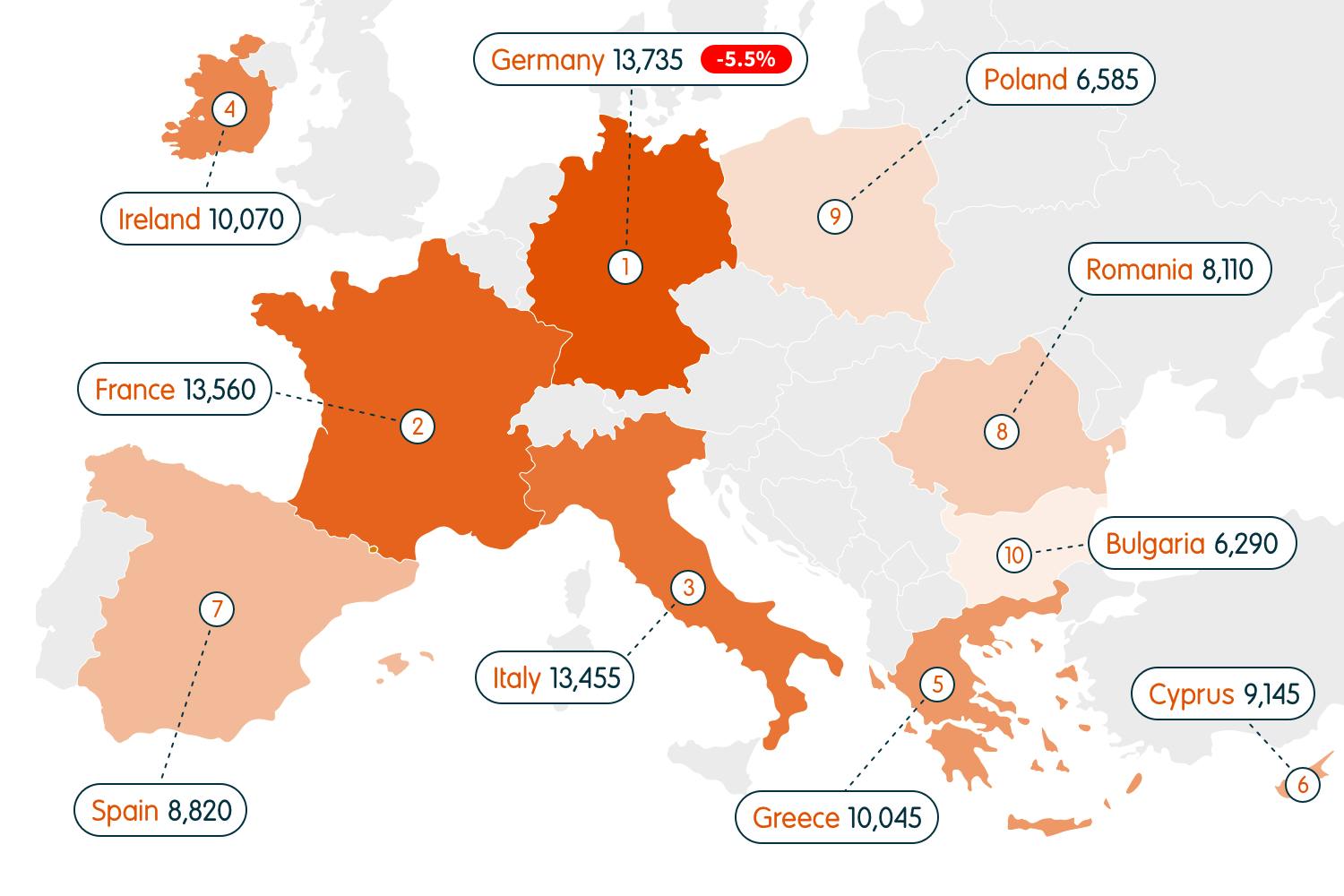
Over the past 5 years the proportion of students from Italy has risen significantly (by 62%), and enrolment figures for those from Spain (47%), Romania (25%), Poland (24%) and France (16%) have also increased.
Countries with the largest percentage decrease include Ireland (20%), Cyprus (EU) (16%) and Greece (8%).
Top 10 non-EU countries
China was by far the largest provider of non-EU students to UK universities in 2016/17, and there has been a 14% increase in Chinese student enrolments between 2012/13 and 2016/17.
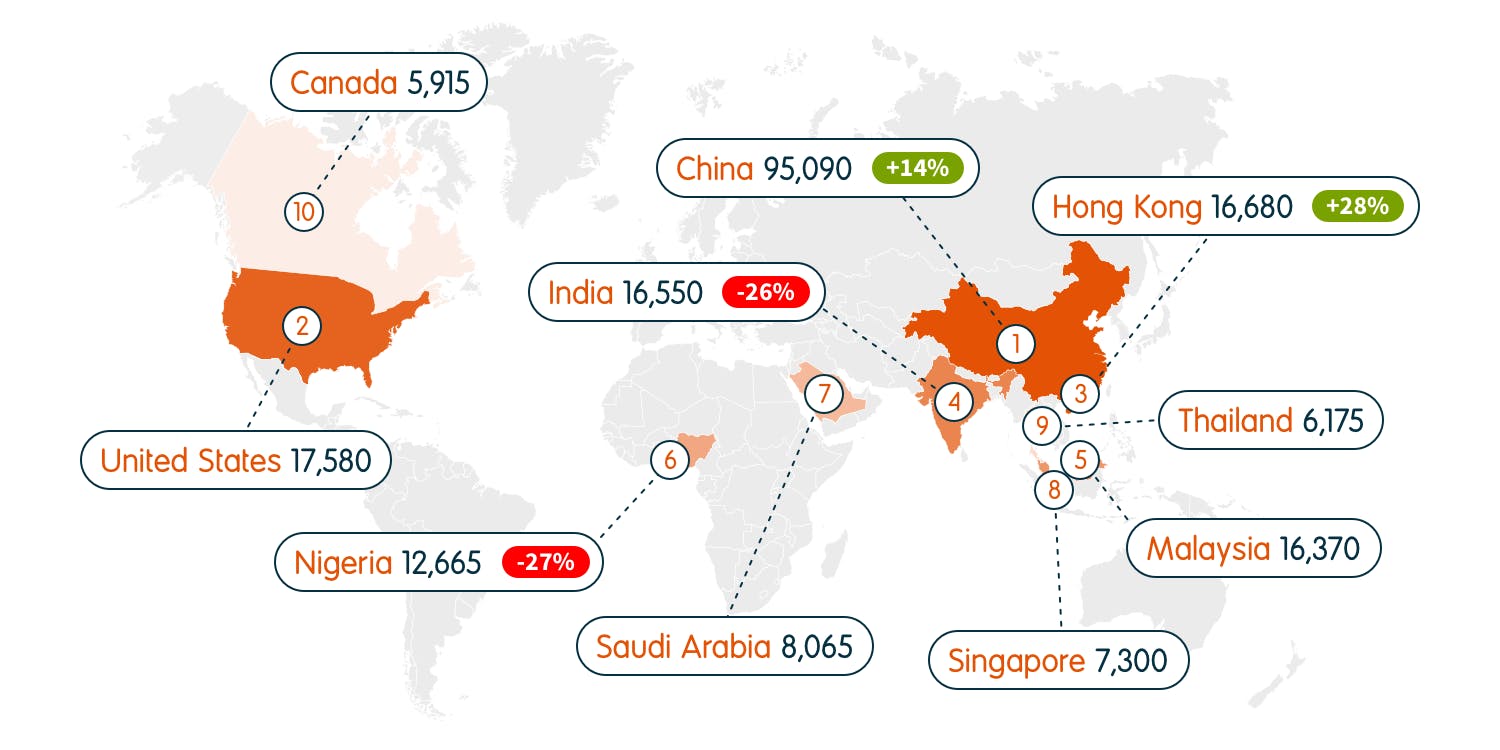
Other locations where there has been a large increase include Hong Kong (28%) and Singapore (21%).
Countries with the largest percentage decrease in UK student enrolments include Nigeria (27%) and India (26%). A universities UK report notes that this decline could be set to continue as India was not included on the UK Parliament's 'low risk' country list for streamlining the UK student visa process.2
Notes
- HESA, HE Student data 2016/17.
- Universities UK, International Students: Quarterly Data Briefing (Aug 18).
For more information on international students, see International Facts and Figures from Universities UK International.
All the data used in the infographics is available in PDF format
Written by

Was this page useful?
Thank you for your feedback